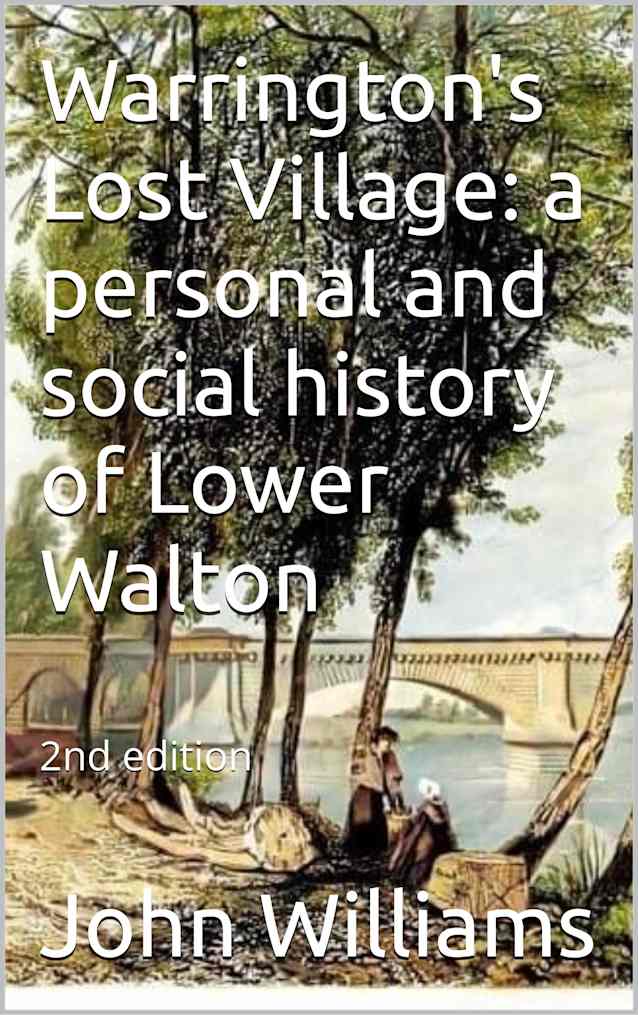
Warrington’s Lost Village: a personal and social history of Lower Walton: 2nd edition
About
A new and revised second edition in a smaller A5 format.
Lower Walton is one of Warrington’s most ancient villages, yet very little of this settlement remains.This book explains the history and charts the growth of the village from Celtic and Roman times up until the end of the nineteenth century when the construction of the Manchester Ship Canal cut through its heart.
The book includes chapters on:
- the origins of its name and likely Celtic origins;
- the impact of Roman settlement in nearby Wilderspool;
- its development as a medieval village as part of the joint manor of Walton;
- how the English Civil Wars of the seventeenth century impacted on village life;
- the impact of the Industrial Revolution with the development of canals and railways;
- the history of three houses in Lower Walton;
- the construction of the Manchester Ship Canal and how this changed the village;
- how life changed during the twentieth century and the impact of two world wars
In addition, there are sections explaining the origins of every road and street within the village from the ancient Roman Wilderspool-Chester road to the most recent in the twenty-first century. This will enable local readers to learn something about the history of their own home.
Illustrated with thirty maps and many original photographs it is possible (with the suggested walking history tour) to explore many of the remaining clues to the history and origins of the village.
Throughout, the place of Lower Walton is presented within a wider local, regional and national history - whilst establishing its quite separate history to that of its northern neighbour Warrington.
Finally, this is a social history which explores the lives of the villagers through the centuries - and hopefully some of the histories told will resonate with the reader and/or current residents. There are many stories of the sacrifice and loss endured by the villagers. For each of the world wars, there is a brief biography of those commemorated on the village’s memorial and details of their service records.
Details include everything from a nineteenth century serial killer who lived on Eastford Road, to the Walton Junction railway disaster and the tragic impact of suicides in the village. Happier times are also included, such as the first walking days and the successes of local farmers.
Content is referenced in detail in order to allow further study if required, and detailed notes offer explanations where terms are used with which the reader may not be familiar.